Finished floors are often one of the last and most expensive parts of a construction project. Unfortunately, they can also be one of the most vulnerable surfaces on a jobsite. Heavy foot traffic, tools, equipment, spills, and debris can quickly damage completed flooring if the right floor protection during construction is not in place. Using the right temporary floor protection, such as Builder Board®, helps prevent costly repairs, project delays, and dissatisfied customers.
Whether you’re a contractor, builder, or remodeler, understanding how to protect floors during construction is essential for maintaining the quality and appearance of finished surfaces until project completion.
Why Finished Floors Are Vulnerable During Construction
Even after installation, floors face constant exposure to jobsite activity. Without proper floor protection for construction, finished surfaces can be damaged by:
- Contractor foot traffic
- Rolling carts and equipment
- Dropped tools and building materials
- Dirt, dust, and debris
- Paint, mud, adhesives, and liquid spills
A single scratch, dent, or stain can lead to expensive repairs or replacement. That’s why investing in quality floor protection products, including Builder Board® and Builder Board™ Hydro Shield™ is a critical step on every construction project.
Common Types of Floor Damage and How to Prevent Them
Choosing the best temporary floor protection depends on the type of flooring, project conditions, and level of traffic expected. For many jobsites, heavy duty floor protection provides the durability needed to withstand demanding construction environments while helping prevent damage underneath.
Potential Floor Damage | What Causes It During Construction? | Recommended Protection |
|---|---|---|
Scratches & Scuffs
| Foot traffic, dirt, dragged materials, carts
| Builder Board®
|
Dents & Impact Damage
| Dropped tools, ladders, equipment
| Builder Board® |
Moisture Damage
| Wet trades, spills, rain exposure
| Builder Board™ Hydro Shield™
|
Paint & Chemical Stains
| Painting, finishing, adhesive work
| Builder Board™ Hydro Shield™
|
Heavy Traffic Wear
| Contractors, carts, material movement
| Builder Board®
|
Carpet Soiling & Wear
| Foot traffic, dust, paint, mud
| Carpet Shield®
|
Hardwood & LVP Surface Scratches
| Contractor traffic and light equipment
| Neo Shield® or Pro Shield®
|
Temporary Walkways
| Frequent movement between work areas
| Builder Board®
|
Newly Finished Floors Requiring Breathability
| Floor curing and moisture vapor concerns
| Builder Board® (breathable floor protection)
|
Water Tracked in From Outdoors
| Rain, mud, and wet footwear
| Builder Board™ Hydro Shield™
|
Stair Damage
| Foot traffic, tools, and material transport
| Stair Shield®
|
Best Practices for Protecting Finished Floors
Install Protection Early
Apply temporary floor protection as soon as the flooring installation is complete and the surface is ready for coverage. Protecting floors before other trades begin work is one of the most effective ways to prevent scratches, dents, and spills throughout the construction process.
Keep Floors Clean
Before installing any floor protection products, thoroughly sweep or vacuum the floor surface. Dirt, dust, and debris trapped underneath protective coverings can create abrasion that damages flooring over time.
Protect High-Traffic Areas
Hallways, entryways, stairways, and material staging areas typically experience the highest concentration of foot traffic and equipment movement. Reinforcing these areas with heavy duty floor protection helps reduce the risk of wear and damage during construction.
Replace Damaged Protection
Inspect your floor covering regularly and replace sections that become torn, saturated, or excessively worn. Maintaining continuous coverage is essential for effective floor protection during construction from start to finish.
Common Floor Protection Mistakes to Avoid
When selecting and installing temporary floor protection, avoid these common mistakes that can actually contribute to floor damage:
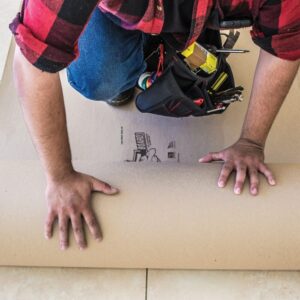
- Applying protection over wet or uncured floors
- Using non-breathable floor protection on newly finished surfaces
- Leaving gaps in high-traffic areas
- Allowing dirt and debris to accumulate beneath the covering
- Using tapes or adhesives that can damage floor finishes
For newly finished flooring, breathable floor protection is especially important. Breathable materials allow moisture vapor to escape while still protecting the surface from jobsite traffic and debris, reducing the risk of trapped moisture causing damage beneath the covering.
Choosing the Right Floor Protection for Construction
Not all floor protection products deliver the same level of performance on a jobsite. When selecting temporary floor protection, look for solutions that provide durability, impact resistance, moisture protection, and easy installation. Products like Builder Board® offer heavy-duty floor protection for hardwood, tile, laminate, concrete, and LVP floors, while Builder Board™ Hydro Shield™ provides added moisture resistance for projects involving wet trades or spill exposure.
By using the right temporary floor protection and following best practices, contractors can help prevent damage, reduce repair costs, and keep finished floors looking their best until project completion.
